Category:

Uncategorized

Wheelchair Accessible Buses for Sale

Transportation access isn’t just a convenience, it’s a lifeline. Millions of Americans rely on wheelchairs, scooters, and other mobility devices every day, yet many remain transportation disadvantaged due to limited accessible vehicle options. According to Bridge to Mobility, more than 2 million people are currently seeking a wheelchair accessible vehicle, and that number grows 8% every year. Yet, only 4% have access to a private vehicle that accommodates their mobility needs. 

In the U.S., an aging population is further fueling growth, 61.2 million Americans are now age 65 or older, a figure that continues to rise. 

From senior living communities to medical transport fleets, demand for ADA-compliant wheelchair buses is accelerating across multiple sectors. 

lineup of 3 white commercial and 3 black commercial buses on pavement and school buses in the background on a dirt hill. Overlay text that says, "Wheelchair Accessible Buses for Sale" and "New & Used Models Available"

Who Needs Wheelchair Accessible Buses?

1. Non-Emergency Medical Transportation (NEMT)

NEMT services are used for an estimated 200 million trips annually in the U.S. These services provide essential transportation to dialysis centers, hospitals, and clinics for patients who otherwise couldn’t reach care safely.

Accessible buses allow NEMT providers to serve more patients efficiently while meeting Medicaid and ADA requirements.

2. Senior Living & Healthcare Facilities

Between 2022 and 2050, the number of Americans aged 65+ will increase by nearly 47%. Senior living campuses, rehabilitation centers, and nursing homes rely on lift-equipped shuttle buses to provide mobility and independence to residents. 

3. Schools & Special Education

Public and private schools must provide accessible transportation for students with disabilities. Wheelchair buses enable inclusive transportation for daily routes, field trips, and extracurricular activities.

4. Churches & Community Education

Faith groups and nonprofits increasingly operate accessible buses for worship services, volunteer programs, and community outreach. These vehicles enable participation for all members, regardless of mobility level.

5. Public Transport & Paratransit

Under the Americans with Disabilities (ADA) Act, public agencies must provide accessible transportation options. However, public wheelchair transportation remains unavailable to over 45% of Americans, a gap that accessible buses can help close.

Understanding ADA Compliance Requirements

Failure to meet ADA standards can lead to denied contracts, lost funding, and liability exposure. Below are the core requirements every wheelchair accessible bus must meet.

1. Wheelchair Lift or Ramp Specifications

  • Must support 600 lbs with a safety factor of at least 6 (3,600 lbs) for moving parts.
  • Platform minimum: 30” x 48” to fit standard wheelchairs.
  • Minimum 56” door clearance on vehicles 22 feet or shorter.
  • Ramp slope no steeper than 1:4 when deployed to ground.

2. Platform Safety Features

  • Side barriers at least 1.5 inches in height extending beyond the vehicle.
  • Dual handrails, 8” minimum usable length, 30-38” height.
  • Slip-resistant platform surfaces.

3. Securement Requirements

  • 30” x 48” clear floor space is the minimum standard in these areas. Requirements vary by state.
  • Separate seatbelt and shoulder harness per position.
  • Wheelchair restraints must be distinct from passenger seatbelts.

4. Interior Accessibility

  • 32-inch minimum aisle width.
  • 60-inch turning radius (or equivalent T-turn space).
  • Clearly marked priority seating.
  • Grab handles and accessible controls throughout.

5. Lights & Illumination

  • 2 foot-candles minimum lighting on steps/lift platforms.
  • Contrasting edge colors and slip-resistant steps.
  • Proper illumination of lift deployment area.

6. Operational Requirements

  • Stop announcements at major transfer points for visually impaired riders.
  • Accessible fair collection systems where applicable.

To ensure complete compliance, check with your individual state’s requirements.

Why Choose DeVivo Bus Sales

Your Partner in Accessible Transportation

At DeVivo Bus Sales, accessibility isn’t an afterthought. Every wheelchair accessible bus we sell meets or exceeds ADA standards and is backed by local service and support across the Northeast.

We offer:

  • Comprehensive selection of wheelchair buses
  • ADA compliance expertise and training resources
  • Financing and grant support to simplify acquisition
  • Partnerships with leading manufacturers like IC Bus and Collins

Our team understands the unique needs of NEMT providers, schools, senior living communities, and paratransit operators, and we’re here to help you find the right fit.

By 0 Comments

School Bus Safety Week

Dates: October 20-24, 2025

Theme: Safety First, Safety Always

Every October, communities across the U.S. come together to recognize School Bus Safety Week, an annual reminder that protecting students on the road is a shared responsibility. Sponsored by the National Association for Pupil Transportation (NAPT) and other organizations, this year’s campaign runs October 20-24, 2025 with the theme “Safety First – Safety Always.”

At DeVivo Bus Sales, school bus safety is at the center of everything we do, from the buses we sell to partnerships we maintain with schools and transportation teams across Connecticut and New England.

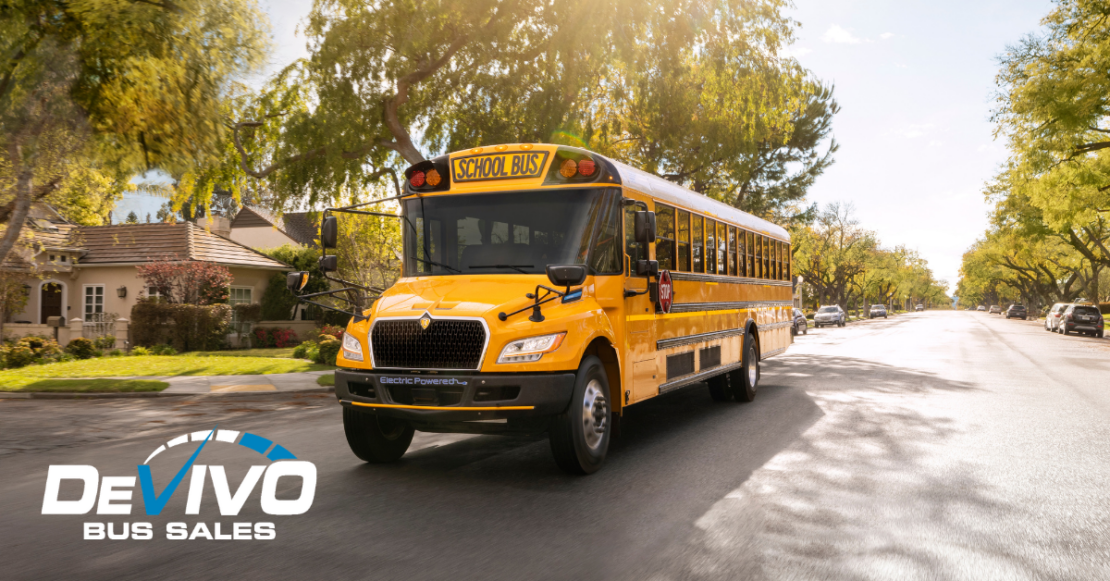
DeVivo school bus driving on a Connecticut street in autumn, promoting National School Bus Safety Week 2025 with overlay text ‘Safety First – Safety Always’.

Why School Bus Safety Matters

School buses remain the safest form of student transportation:

These numbers reinforce a simple truth: while buses themselves are highly safe, student safety depends on awareness and responsibility from everyone, including drivers, parents, and communities.

Bus Stop & Loading Safety Tips

The loading and unloading process is the most critical safety moment for students. The NHTSA recommends the following precautions:

  • The 10-Foot Rule: Children should wait at least 10 feet (five giant steps) from the curb.
  • Wait for the Driver: Never board or exit until the bus is completely stopped, the door is open, and the driver signals it’s safe.
  • Crossing Safely: Always cross in front of the bus, walk at least 10 feet ahead, and make eye contact with the driver.
  • Avoid the Danger Zone: Children should never walk behind the bus; if an item drops, tell the driver instead of retrieving it yourself.

For parents, talking to children about these rules before school starts can dramatically reduce risk. For drivers, remembering the area around a bus is a high-risk zone is essential for student safety.

Understanding School Bus Lights & Stop Arms

School bus lights communicate the driver’s intentions:

  • Yellow flashing lights: Bus is preparing to stop. Slow down and prepare to stop your vehicle.
  • Red flashing lights + extended stop-arm: Bus has stopped, and children are boarding or exiting. You must stop and remain stopped until the bus moves and lights stop flashing.

Illegal passing of a school bus is a major safety hazard and is illegal in all 50 states. Awareness and compliance save lives.

Diagram of a school bus on a road with grass, showing red and yellow lights with explanations about school bus warning lights.

Advanced Safety Technologies in 2025

Modern buses are equipped with cutting-edge safety features to protect students:

  • LED Lighting & Reflective Materials: Improve visibility in low-light conditions.
  • Crossing Arms & Stop-Arm Cameras: Prevent dangerous passing incidents.
  • Backup Cameras & Sensors: Increase driver awareness of blind spots.
  • Enhanced Structural Design: Stronger crash protection and rollover safety.
  • Driver Assistance Systems: Monitor driver fatigue and road awareness.

At DeVivo Bus Sales, we partner with manufacturers like IC Bus to provide buses that combine proven safety standards with modern innovations, ensuring that students are protected today and into the future.

Electric School Buses: Safe, Clean, and Reliable

The school bus industry has been evolving. More than 5,000 electric school buses have been deployed across North America, including many in New England. These vehicles offer a quieter, cleaner ride while maintaining the highest safety standard:

  • Federal standards, including FMVSS, continue to evolve for electric buses.
  • Dealers and technicians receive specialized training to support safe operation and maintenance.
  • At DeVivo Bus Sales, our team is prepared to sell, service, and support electric buses safely in Connecticut and beyond.

Why DeVivo Bus Sales is Your Safety Partner

School Bus Safety Week reminds us that safety is a collective responsibility. At DeVivo Bus Sales, we take that responsibility seriously:

  • Local Expertise: We understand the needs of Connecticut and New England school districts.
  • Advanced Security Features: We provide buses equipped with modern technologies that enhance student protection.
  • Comprehensive Support: From sales to service, we help districts maintain safe, reliable fleets.
  • Industry Leadership: Our partnerships with safety-focused manufacturers ensure we stay ahead of emerging standards.

Because when it comes to transporting students, there is no compromise: Safety First. Safety Always.

Explore our school bus inventory or contact our team today to discuss the advanced safety features available for your fleet.

FAQ

Q: Are school buses really safer than other modes of transportation?

A: Yes! School buses are 70 times safer than traveling by car, thanks to federal safety standards, advanced safety features, and specialized driver training. Less than 1% of all traffic fatalities involve children on school transportation vehicles.

Q: What do school bus flashing lights mean?

A: Yellow lights mean the bus is preparing to stop. Slow down and prepare to stop. Red lights and extended stop-arm mean the bus has stopped, and children are boarding or exiting. You must stop until the bus moves and lights stop flashing.

Q: How far should children stand from the curb while waiting for the bus?

A: Children should wait at least 10 feet (five giant steps) away from the curb until the bus comes to a complete stop and the driver signals it’s safe to board.

By 0 Comments

Understanding Your Bus’s DPF System

If your bus is showing warning lights, losing power, or emitting black smoke, it may be time to take a closer look at its exhaust system, specifically the Diesel Particulate Filter (DPF). Modern diesel buses are equipped with advanced emissions technology to reduce pollution, keep fleets compliant, and maintain engine efficiency.

At the heart of this system is the DPF, a critical component that often goes unnoticed until performance issues arise.

close up image of a diesel particulate filter laid in among the engine parts of a bus

What is a Diesel Particulate Filter (DPF)?

A Diesel Particulate Filter (DPF) is part of your bus’s exhaust and emissions system. It traps soot and ash from diesel engine exhaust to prevent harmful emissions and help your bus pass inspections. Most DPFs remove 85% or more of soot particles, keeping them compliant with EPA emissions standards.

While soot can be burned off through regeneration, ash is incombustible and accumulates over time, making professional cleaning essential for maintaining filter efficiency and engine performance.

How Does a DPF Work?

The DPF captures and removes soot and particulate matter from diesel exhaust through a ceramic honeycomb structure. Over time, the trapped soot must be burned off in a process called regeneration, which converts soot into ash.

Types of DPF Regeneration

According to the Universal Technical Institute (UTI), there are three main ways a DPF regenerates:

  • Passive regeneration: Happens automatically during highway driving when engine exhaust is hot enough.
  • Active regeneration: Triggered when the engine isn’t producing enough heat. Fuel is injected to increase temperature and burn off soot.
  • Parked/manual regeneration: Required if passive and active regeneration fail. The bus must be stationary, and the process can take 20–60 minutes. For safety, exhaust must be directed away from flammable materials.

Even with proper regeneration, ash accumulation cannot be burned off and can eventually reduce filter efficiency, increase exhaust backpressure, and slightly raise fuel consumption over time. Studies show that after 33,000 miles, ash may equal soot in the filter, and after 150,000 miles, ash can comprise up to 80% of the trapped material.

Common Signs Your Bus Needs DPF Service

Fleet managers or drivers should look out for:

  • Orange engine warning light or DPF indicator on the dashboard
  • Reduced engine performance or sluggish acceleration
  • Black smoke coming from the exhaust
  • Higher fuel consumption than usual
  • Frequent active regeneration cycles

If your bus shows any of these symptoms, it’s time to schedule professional diesel exhaust service to avoid costly repairs.

Causes of a Blocked or Failing DPF

Several factors can lead to a blocked or failing DPF:

  • Short trips or stop-and-go driving: Prevents the filter from fully regenerating.
  • Poor servicing or maintenance: Skipping routine checks accelerates wear.
  • Incorrect oil or low-quality fuel: Must use low-ash oil and ultra-low sulfur diesel (ULSD) to prevent excessive soot.
  • Frequent low-fuel operation: Increases the likelihood of clogging.
  • Extended use leading to ash accumulation, primarily from engine oil additives, fuel impurities, and normal engine wear

Addressing these factors proactively helps extend the life of your bus’s exhaust system and DPF.

The Cost of Neglecting DPF Maintenance

Replacing a diesel particulate filter can cost $3,000 to $10,000, depending on the vehicle. For older buses, that may be more than the value of the vehicle itself. Regular professional cleaning is a far more affordable option and extends the filter’s life significantly.

The Professional DPF Cleaning Process

At DeVivo Bus Sales, we use industry-approved cleaning methods that restore filters to near-new condition:

  1. High-temperature baking to loosen hardened soot and ash deposits.
  2. Compressed air cleaning by trained technicians to avoid damaging the fragile ceramic structure.
  3. Reverse flow machine cleaning with high-pressure air to fully clear filter channels.

Manual or targeted cleaning is particularly effective because ash tends to accumulate in certain areas of the filter that automated systems may miss. This process typically takes about 90 minutes and helps prevent unexpected downtime.

How Often Should You Clean a DPF?

  • First cleaning: 150,000 to 200,000 miles
  • After that: Every 100,000 miles
  • Best practice for fleets: Incorporate DPF cleaning into routine fleet maintenance programs instead of waiting for the warning light

Regular cleaning ensures that both soot and ash are properly removed, preventing engine strain, maintaining fuel efficiency, and extending filter life.

Why Choose Professional DPF Service for Your Bus Fleet

  • Prevents costly repairs or replacements
  • Keeps fleets compliant with emissions standards
  • Reduces downtime by avoiding unexpected breakdowns
  • Local service from experienced technicians at one of our locations

Schedule Your Bus DPF Cleaning Today

Don’t wait until your DPF warning light comes on. Stay ahead of costly issues with professional bus DPF cleaning service from DeVivo Bus Sales.

Contact our service team today to schedule DPF maintenance and keep your buses running clean, compliant, and efficient.

FAQ

Q: How can I tell if my bus DPF is blocked or failing?

A: Look for an orange DPF or engine warning light, reduced power, black smoke, or increased fuel consumption. Early detection prevents costly repairs.

Q: How often should a bus DPF be professionally cleaned?

A: First cleaning is typically recommended around 150,000–200,000 miles, then every 100,000 miles. Proactive maintenance keeps buses running efficiently.

Q: What causes a DPF to become blocked or fail?

A: Short trips, stop-and-go driving, poor servicing, using incorrect oil or low-quality fuel, running the bus frequently on low fuel, and ash accumulation from normal engine use can all lead to DPF issues.

By 0 Comments

How to Select the Right Bus for Your Organization

Whether you’re running a private shuttle service, outfitting a resort or campus fleet, or looking to transport clients in comfort and style, choosing the best commercial bus for your business is more than just choosing what’s available on the lot. When choosing a bus, you need something that works for your specific needs.

At DeVivo Bus Sales, we’ve helped hundreds of organizations find the right bus for them.

1. Start with How

The most important question to ask first is how will you use the bus? Ask yourself:

  • Will this bus be used for daily routes, long-distance charters, or occasional group outings?
  • Do your passengers include seniors, people with disabilities, or children?
  • Will the vehicle operate in urban, rural, or a mixed environment?

2. Match Capacity to Demand

How many passengers will you be transporting on a regular basis? 

Buying too small could lead to overcrowding or more frequent trips, while going too big adds unnecessary cost and complexity. Think about it as:

  • Mini-Buses (10-30 passengers): Ideal for hotel shuttles, senior centers, field trips, and NEMT.
  • Mid-Size Buses (30-40 passengers): Great for colleges, airports, or employee shuttles.
  • Full-Size Buses (40+ passengers): Best for charter services, public transport, or tour operators.

If you’re transporting gear, like wheelchairs, luggage, or something else, be sure to factor in storage space.

3. Prioritize Safety Features

Passenger safety is essential. Make sure the bus you choose complies with all relevant regulations and includes safety basics like:

  • Seatbelts for all passengers
  • Multiple emergency exits
  • Advanced braking systems
  • Backup cameras and driver visibility aids
  • Wheelchair lifts or ramps (if needed)

4. Consider Fuel and Power Options

With rising fuel costs and new regulations, many businesses are exploring greener, more cost-effective alternatives to traditional gas or diesel buses.

  • Gas & Diesel: Still common, especially for rural routes or heavy-duty use.
  • Electric Buses: Ideal for short urban routes or sustainability-minded fleets; offers major savings on fuel and maintenance over time. 

At DeVivo Bus Sales, we carry electric options and can help assess whether they’re a fit for your route and budget.

5. Accessibility and Comfort

From mobility features to modern amenities, think about your riders’ expectations.

  • For accessibility: ADA-compliant wheelchair lifts, grab rails, and wide aisles
  • For comfort: Air conditioning, padded seating, entertainment systems, USB charging ports, and Wi-Fi

A comfortable, welcoming ride can elevate your brand and drive repeat business.

6. Weigh New vs Used Buses

New buses offer the latest technology, warranties, and full customization, but at a higher upfront cost.

Used buses can be a smart, budget-friendly choice, especially when they’ve been properly maintained. DeVivo Bus Sales’ used inventory features models from a wide variety of trusted brands.

7. Plan for Maintenance and Support

The real cost of a bus is more than just the sticker price. Maintenance, parts availability, and support services play a huge role in the long-term value.

That’s why DeVivo Bus Sales offers:

  • Maintenance
  • Access to OEM parts
  • Dedicated service centers across the Northeast
  • Support for gas/diesel and electric models

We’re not just here to sell you a bus, we also have the capabilities to keep it running reliably for years to come. 

8. Choose a Dealer That’s in It for the Long Haul

You deserve more than just a one-time transaction. You deserve a partner who knows your industry and stands behind what they sell.

At DeVivo Bus Sales, we offer:

  • Financing options for every budget
  • Expert guidance from experienced professionals
  • A full-service approach: sales, parts, service, and support

Whether you’re buying your first bus or expanding a large fleet, we’ll help you make a decision that fits your goals, not just your budget.

Ready to Find the Right Bus?

Finding the best commercial bus for your business doesn’t have to be overwhelming. With the right information and the right partner, confident, cost-effective choice.

By 0 Comments

IC Bus vs. Collins Bus: Head-to-Head Comparison

When it comes to school bus manufacturers, two companies stand out from the pack. IC Bus and Collins Bus are both leaders in the North American school bus industry, thanks to reputations for quality, reliability, innovation, and customer service. But while these companies have a lot in common when it comes to excellence in their fields, they vary significantly in the products they offer and the purposes their vehicles serve.

In this article, our experts provide a head-to-head comparison of IC Bus and Collins Bus. You’ll learn about each company’s specialties, along with the technology and support options they offer. We also provide guidance on which company may be the right manufacturer for your school bus needs.

Company Overviews

Before getting into direct comparisons of specific features of each company, we wanted to provide some basic information about IC Bus and Collins Bus. In the table below, you’ll find an overview of both companies.

IC BusCollins Bus
HeadquartersLisle, IllinoisSouth Hutchinson, Kansas
Manufacturing LocationTulsa, OklahomaSouth Hutchinson, Kansas
Founding Date2002 1967
Owner CompanyInternational MotorsForest River
Product SpecialtyFull-size school buses (Type C)Small-capacity and accessibility buses (Type A)

IC Bus Summary

Founded in 2002, IC Bus has roots dating back to 1933, when it started life as Ward Body Works. Today, the company is an industry leader in the manufacture of full-size Type C school buses. IC Bus is also known for its alternative-fuel school bus options.

Collins Bus Summary

Since its inception in 1967, Collins has focused primarily on smaller buses. The company was one of the first manufacturers to produce a van-based school bus. Collins is considered a pioneer of the Type A bus and implementing accessibility features into its vehicles — a reputation it still holds today.

Bus Lineup Comparison: IC Bus vs. Collins Bus

IC Bus and Collins specializes in different segments of the school bus market. We’ve outlined each company’s core product lineup in the table below.

FeatureIC BusCollins Bus
Types of BusesType CType A
Passenger CapacityUp to 83Up to 30
Fuel TypesDiesel, gasoline, electricGasoline, propane
Use CasesDaily school routes, long-distance travelAccessibility buses for schools, short routes, private schools, daycares

IC Bus vs. Collins Bus: Equipment Comparison

IC Bus and Collins are considered innovators in their respective market segments. Both manufacturers offer advanced safety and technological features that come standard with their school bus models or can be added to them.

Safety Features

IC buses are built with integrated chassis and bodies, which provides enhanced structural integrity and better protects passengers in the event of a collision or rollover. In general, school buses built by IC are known for their durability and reliability.

Collins Bus has focused solely on the cutaway van chassis and has developed a celebrated reinforced safety cage to strengthen the body of its vehicles. The company’s Type A school buses feature a low center of gravity, which increases overall stability and greatly reduces the risk of rollover.

Technology Features

IC Bus can outfit its vehicles with advanced driver assistance technology. Features like 360° cameras and collision avoidance systems can provide a safer, more regulated driving experience.

Accessibility technology is a key feature of Collins buses. The company continues to develop designs for technology like wheelchair lifts and kneeling capability to provide a better rider experience for people with accessibility needs.

Collins Bus vs. IC Bus: Customer Service Comparison

Both Collins Bus and IC Bus have reputations for strong customer support. Like their products, however, each company caters to different markets and goes about providing customer service in different ways.

Customer support in the school bus industry extends well beyond providing assistance over the phone. A company’s service locations, who their service model is tailored to, their ability to supply parts, and the training they can provide repair technicians are all critical parts of keeping their customers’ bus fleets running smoothly and with minimal downtime.

In the table below, we provide a head-to-head comparison of customer support features for IC Bus and Collins Bus.

FeatureIC BusCollins Bus
Dealer networkExtensive North American-wide dealership network, backed by International MotorsRegional dealership networks with a strong emphasis on building customer relationships
Service modelOptimized for large fleet support Tailored to small-to-medium fleets
Parts supportStrong, consistent centralized parts supply chain backed by International MotorsUses Chevrolet and Ford platforms with widely-available parts 
Technician trainingOffers International Motors-certified tech programs and supportProvides training and support through dealership networks

IC Bus vs. Collins Bus: Which Is Best For Me?

When it comes to school bus manufacturers, both IC Bus and Collins Bus are excellent options with strong reputations for their products and service. There simply isn’t much separation when it comes to the quality of their offerings. 

However, the differences in their product offerings make each one a better fit for some uses and customers than others. In this section, we outline a few common customer profiles that are excellent fits for each manufacturer.

You should consider IC Bus vehicles if:

  • You need home/school transportation for public school systems or large private schools
  • You want to invest in alternative fuel technology
  • You need a high-capacity school bus for long-distance transportation

You should consider Collins Bus vehicles if:

  • You need transportation for people with accessibility needs
  • You want transportation for a smaller private school, daycare, or after school program
  • You operate in a dense urban environment

Conclusion

The truth is that you can’t really go wrong with IC Bus or Collins Bus when it comes to getting a reliable school bus that’s backed by robust customer support. Which manufacturer is right for the needs of your organization depends on the students you serve and how you serve them.

If you’re still having a hard time choosing between the two manufacturers, our specialists at DeVivo Bus Sales will be happy to listen to your needs and situation and help you find the best possible solution.

20241109 092146
By 0 Comments

Shuttle Bus for Sale: 2025 Buying Guide

As the shuttle bus industry has developed by leaps and bounds in recent years, you now have a wide range of options available. That’s a great thing when it comes to getting a precise fit for your organization, but it also means there’s a lot you need to think about.

We created this buyer’s guide to shuttle buses to help you understand what options you have and the points you need to consider 

Buying a Shuttle Bus: What To Consider

There are a few things to take into account when deciding which shuttle bus is the right choice for your needs. In this section, we cover the main points you should consider when researching your purchase to ensure you get the best option.

Shuttle Bus Needs

Before you begin shopping for a new shuttle bus, the first step is to get a concrete idea of what you need from one. The needs you should consider include:

  • Passenger types: Different types of shuttle buses are better suited for different types of passengers like daily commuters, employees, seniors, tourists, and hospitality guests.
  • Passenger volume: How many passengers you need to transport regularly will determine the size of shuttle bus you need.
  • Trip frequency and distance: Some fuel types and bus types are better for high-frequency, short-distance travel than periodic long-haul transport, and vice-versa.
  • Brand image: Your shuttle bus will represent your brand, so you’ll need to consider whether you want to promote an image of luxury or a more utilitarian one.
  • Accessibility needs: If your ridership regularly includes people with accessibility needs, you’ll want a shuttle bus that includes equipment like wheelchair lifts, low-step entryways, flat floors with ramps, and more.

Types of Shuttle Buses

There are several different categories of shuttle buses to choose from, each with distinct features that make them a better choice for some uses than others. In the table below, we provide an overview of the most common types.

Shuttle Bus TypeCapacityIdeal UseDrawbacks
Transit-style shuttles30 or more Frequent, short-distance routes such as airport or corporate campus useMay be difficult to navigate tight roadways and dense environments
Cutaway buses14 – 28 School or community transportationHigher long-term operating costs
Van-based shuttles7 – 15Hotel, medical, and airport transportationLimited capacity
Luxury shuttlesVariesVIP transportation, party and wedding rentals, corporate transportationHigh initial cost, more upkeep

Seating, Layout, and Accessibility Options

Shuttle buses also come with a world of options for how they are laid out, how passenger space is arranged, technology and comfort features, and more. Some of the options you’ll need to choose from include:

  • Seating arrangements: Shuttles can be configured to allow for different types of seating, such as having rear-facing seats or leaving standing room.
  • Accessibility features: Your shuttle bus can be outfitted with ADA-compliant features like wheelchair lifts, flat floors with access ramps, and wider aisles.
  • Storage space: Hotel and airport transportation typically requires ample storage space for luggage, which can be built in place of seating if necessary.
  • Seating flexibility: You can opt for removable and interchangeable seating in your shuttle bus to allow you to reconfigure seating as needed.
  • Comfort features: Options like charging ports and luxury touches like leather seats, recliners, and premium finishing materials are also things to consider.

Fuel Type and Powertrain Options

The type of fuel and engine configuration of your shuttle bus affects its performance and the cost of operating it. In the table below, we provide an overview of each fuel type.

Fuel TypeRange ProsConsIdeal Use
DieselLongGood fuel economyHigher upfront costsLong-range shuttle routes
GasolineMediumLow upfront cost

Fuel available everywhere
Limited rangeFrequent, short-range trips
PropaneMediumClean-burningHigher initial cost than gas or diesel shuttlesPublic transit systems with varying route lengths
ElectricShortZero emissions

Eligible for financial incentives
Limited rangeSchool and corporate campus transportation
HybridLongExtensive range

Low emissions
Fewer options than other fuel typesPublic transportation and tourism transportation

Safety and Technology Features

Modern shuttle buses can also have technology that improves safety, functionality, and passenger comfort. These features include:

  • Safety equipment: Features like seat belts, anti-lock brakes, and advanced stability control all help ensure passenger and driver safety.
  • Driver assistance features: Technology like lane assist, collision warning systems, backup cameras, and 360° cameras can make shuttle buses safer and easier to drive.
  • Fleet management options: Telematics features like driver behavior monitoring, real-time GPS, and more can help you keep an eye on your shuttle fleet and ensure adherence to safe driving practices.
  • Passenger-facing features: Digital signage, PA systems, automatic doors, and other options can improve the passenger experience.

Shuttle Bus Costs

The purchase price of a shuttle bus isn’t the only cost to consider. You’ll also want to factor in costs that include:

  • Operating costs: Regular expenses like fuel, maintenance, and insurance are necessary costs for running your shuttle bus.
  • Repairs: Shuttles in regular use will need occasional repairs. Repair costs vary by the age and mileage of the bus, manufacturer, shuttle type, and engine configuration.
  • Depreciation: If you plan to resell your shuttle bus after a few years, its resale value is an important consideration. New shuttle buses depreciate in value more quickly and severely than used ones.
  • Incentives: Eco-friendly shuttle buses like electric, hybrid, and propane buses are often eligible for tax credits, rebates, and other incentives from federal and local governments that fossil fuel-based buses are not, reducing their purchase price.

Shuttle Bus Manufacturers

Based on our experience in the shuttle bus industry, we’ve identified a few manufacturers that we know we can trust to consistently provide high-quality vehicles for our customers. The brands we feature include:

  • Turtle Top: With a history dating back 100 years, this storied manufacturer remains a leader in innovation across a wide range of shuttle bus types.
  • Diamond Coach: These buses are renowned for their durability and longevity, with impact-resistant, rust-free buses that hold their value for many years and miles.
  • Sunset Vans: A trusted name in ADA mobility for over 40 years, Sunset Vans is one of the nation’s largest wheelchair van manufacturers.

Shuttle Bus Buying Checklist

Now that you’ve learned about the key points of consideration, you can use the checklist below to guide your shuttle bus shopping journey.

  • Average number of passengers __________________________________
  • Long or short distance routes ____________________________________
  • Accessibility needs ____________________________________________
  • Seating configuration __________________________________________
  • Comfort/luxury features _________________________________________
  • Storage needs ________________________________________________
  • Safety and technology features ___________________________________
  • Fuel type _____________________________________________________

Conclusion

Using the information in this article and the checklist above, you should be able to narrow your search to a few strong options for your shuttle bus purchase. Here at DeVivo Bus Sales, we’re also happy to help guide you to the best possible choice for your needs. Give us a call at (860) 356-0252 or reach out through our quote tool to get in touch.

20241104 123836
By 0 Comments