What Is a MFSAB? Activity Buses for Churches, Camps, Daycares and Youth Programs
September is when the calendar fills up. Youth groups are back in session, after-school programs are open, fall sports are underway, and camp directors are already thinking about next summer. If your organization moves kids from place to place, you’ve probably wondered whether a passenger van, a shuttle bus, or something built more like a school bus is the right call.
For a lot of non-school organizations, that “something” is a MFSAB bus. Here’s what a MFSAB is, who’s allowed to buy one, and how to tell whether it fits your group.
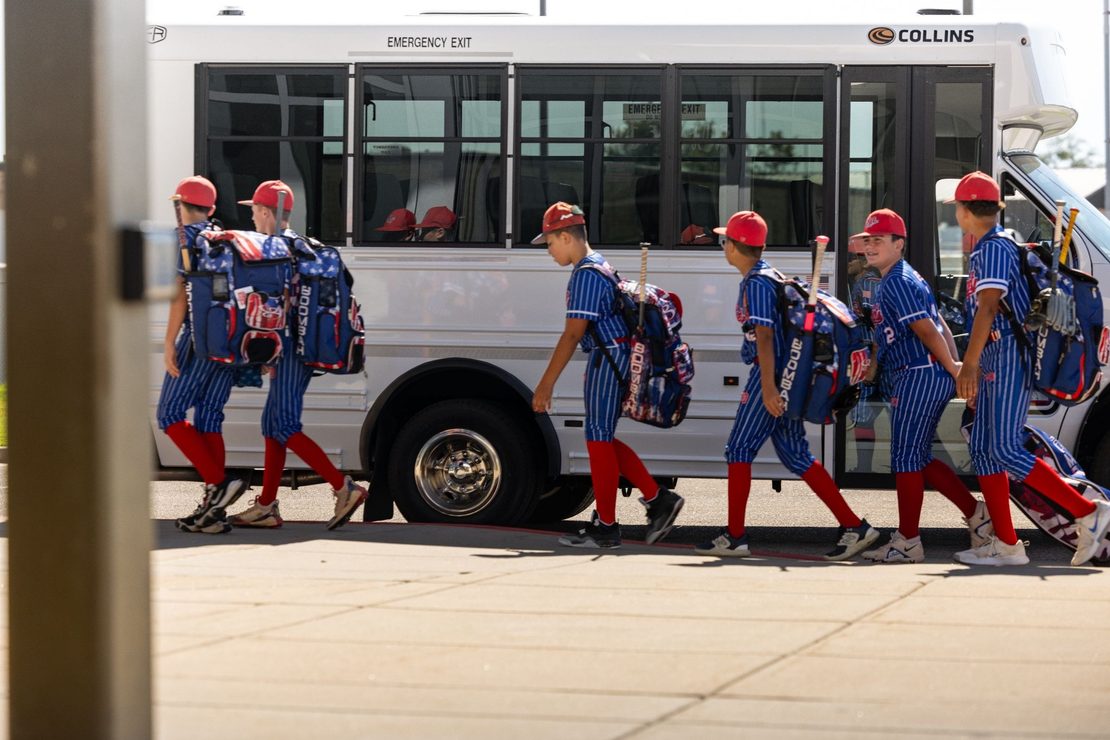
What is a MFSAB bus?
MFSAB stands for multi-function school activity bus. Under federal regulations it’s a school bus whose purposes don’t include carrying students to and from home or school bus stops, and it must meet every federal safety standard that applies to school buses except the ones requiring flashing lights and stop arms.
In plain terms, you get school bus crash-protection engineering without the red lights and stop arm you only need when loading children at the curb. MFSABs are typically white or another neutral color, so they look more like a shuttle than a yellow school bus.
That engineering is the point. NHTSA says school buses are built with protective seating, high crush standards and rollover protection, and small school buses (10,000 pounds GVWR or less) must have lap or lap/shoulder belts at every seating position. Larger buses rely on closely spaced, energy-absorbing seats instead.
MFSABs were also never meant to be school-only. When NHTSA proposed the category, it noted that the name doesn’t necessarily imply use limited to school activity trips.
Who can buy a MFSAB?
Nearly any organization can. What matters is how the bus will be used, not who is buying it. If a new bus will be used significantly to carry students between home and school or to school bus stops, it must be sold as a true school bus. NHTSA’s own example is a church that buys a bus partly to shuttle students to school sporting events several evenings a week. That bus has to be a school bus.
The definition of “school” works in your favor. NHTSA counts preprimary, primary and secondary schools, public or private. It does not count daycares, child care centers, preschools or Head Start programs, religious instruction like Sunday school, athletic teams with no school connection, or colleges. (Head Start programs have their own vehicle rules, so check with the Office of Head Start.)
That opens the door for organizations like:
- Churches and ministries running youth trips, mission trips and outreach events (see our church bus buying guide)
- Summer camps shuttling campers to field trips and events
- Daycares, child care centers and after-school programs
- Youth sports clubs and community organizations
- Community and senior programs (if riders need a wheelchair lift, see our wheelchair accessible bus guide and our post on buses for healthcare and senior living)
Expect your dealer to ask how you’ll use the bus. NHTSA advises dealers to ask whether a bus will be used significantly for student transportation to school and to get the buyer’s answer in writing. That question protects you as much as it protects the dealer.
MFSAB vs. 15-passenger van vs. commercial shuttle bus
| 15-passenger van | Commercial shuttle bus | MFSAB | |
| Built to federal school bus safety standards | No | No | Yes, except traffic-control devices |
| Best fit | Small groups, occasional trips | Adults, guests, employees, airport and hotel runs | Kids and youth groups, activity travel |
| CDL under federal rules | Generally no | Depends on capacity and weight | Depends on capacity and weight |
On vans, the numbers are sobering. NHTSA reports that 57% of the 235 occupants killed in 15-passenger van rollover crashes from 2010 to 2019 were ejected, and 69% of occupants killed in crashes were known to be unbelted. NHTSA also says electronic stability control has taken rollover off the table as a danger for newer 15-passenger vans. Even so, stability control doesn’t change what a van is built to. NHTSA strongly recommends that all buses used to transport school children be certified to its school bus safety standards.
If you’re moving adults instead, such as hotel guests, employees, airport passengers or patients, a commercial shuttle bus is usually the better fit, with more comfort and cargo options. Our shuttle vs. transit vs. van comparison walks through that decision.
Do you need a CDL to drive an MFSAB?
It depends on size and on your state. Federal rules require a CDL for a vehicle designed to carry 16 or more passengers including the driver, and for a single vehicle with a GVWR of 26,001 pounds or more. Many small Type A MFSABs are configured for 14 passengers plus the driver, which keeps them under the passenger threshold. Collins, for example, builds a non-CDL MFSAB on Ford or Chevy chassis. Larger MFSABs need a CDL, and a passenger endorsement is required for vehicles designed to carry 16 or more.
State rules then layer on top. Connecticut requires an “A” (activity vehicle) endorsement to operate a student transportation vehicle used for school-sponsored events and activities. Massachusetts’ 7D law has its own provisions for activity transportation involving private schools, child care centers and camps. Confirm requirements with your state’s DMV or RMV and your insurer before you buy.
Six questions to ask before you buy
- How exactly will we use it? Write it down. It determines whether an MFSAB is even the right category.
- How many riders and drivers? Check whether your seating count crosses the CDL line.
- What do our state, licensing agency and insurer require? Some insurers require churches to use only MFSABs, especially when the church runs child care.
- Does anyone need a wheelchair lift or other accessibility equipment?
- Who will service it? MFSABs are built on Ford and Chevy chassis, and our fleet repair services team can keep it road-ready.
- New or used? Federal rules govern the manufacture and sale of new vehicles, while each state decides how vehicles may be used.
MFSABs at DeVivo Bus Sales
Our activity bus lineup includes Collins and IC Bus. Collins’ MFSAB is a non-CDL option with a one-piece tubular roof and configurations built for everything from after-school programs to weekend trips. We help schools, day care and after-school programs, churches and community organizations across New England match the right vehicle to the way they’ll actually use it, including when the answer is a shuttle bus instead.
Ready to compare? Browse our activity buses, see the Collins Bus lineup, check current inventory, or request a quote.
MFSAB FAQs
What does MFSAB stand for? Multi-function school activity bus.
Can a church buy a MFSAB? Yes, as long as the bus won’t be used significantly to carry students between home and school or to school bus stops.
Can a MFSAB be used for home-to-school routes? No. That use requires a true school bus with the stop arm and red flashing lights.
Are MFSABs yellow? Typically not. They’re usually white or another neutral color.
Is a MFSAB safer than a 15-passenger van? MFSABs are built to federal school bus crash standards, and vans are not. NHTSA recommends school-bus-certified vehicles for transporting school children.